Description
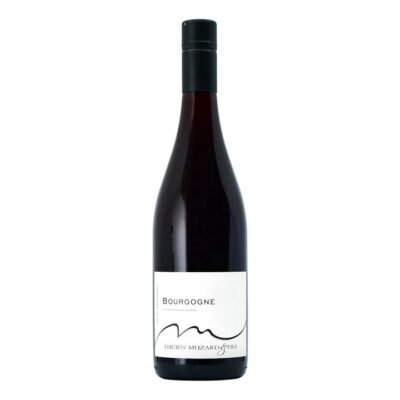
Product Description:Bright red fruit meets Burgundian precision. Domaine Lucien Muzard’s Bourgogne Rouge 2023 is a finely judged Pinot Noir that speaks of its southern Cote de Beaune origins. Sourced from parcels in Maranges, Santenay, and the Hautes Cotes, it marries supple fruit with a discreet mineral thread — a testament to both site and sensitive winemaking. Raised 70% in barrel (15% new) and 30% in tank, the wine captures freshness without sacrificing depth. The Muzard family’s light-handed approach — partial whole-bunch fermentation, gentle extraction, and minimal filtration — brings clarity to the fruit while retaining a subtle textural grip. The result is a wine that is vibrant in youth yet structured enough for short-term cellaring. For a domaine with roots stretching back to 1645, Claude and Herve Muzard’s work feels resolutely contemporary, combining traditional vineyard care with precise, modern cellar craft. This 2023 Bourgogne Rouge is both an introduction to their style and a reminder that thoughtful farming and restraint in the winery can deliver serious value in Burgundy. The Maker Nine generations of Muzards precede Claude and Herve, who today control Domaine Lucien Muzard across 16 ha of vineyards in Santenay, Chassagne-Montrachet, Puligny Montrachet and Pommard. The family can trace its roots back to 1645, but it was not until the two sons, Claude and Herve took over the domaine from Lucien in 1995 that it began bottling at the estate rather than selling to negociants. Today 85% of the production is red wine but the white wines are gaining in stature with several key premier cru parcels in Santenay being replanted with Chardonnay. Santenay borders Chassagne Montrachet to the north adjoining notable premier cru’s such as Morgeots, Les Embazees and Les Baudines. Clearly there is potential for white wines with much limestone apparent in a complex series of fractured geological faults where the Cote dÓr ends and turns the corner towards Maranges signalling the end of the Cote dÓr slope. Santenay contains a great variety of soil differences and vineyard expositions, the potential of which deserves discovery. Reducing vine yields and adoption of some modern wine-making techniques has resulted in spotlessly pure, great value Burgundy in both colours. They started using small bins for harvesting, a vibrating sorting table and conveyor belts rather than pumps to keep crushing to an absolute minimum as well as acquiring a new temperature controlled fermentation facility with new wooden vats and a new precision controlled press. In 2022 they have made some modifications in white vinification, adding no sulphur until after malolactic. They have purchased some 600 litre barrels for white, along with foudres for red, as bigger formats keep the carbon dioxide better, thus needing less sulphur. Mostly 350 litre barrels otherwise. The Muzards like to crush their white grapes before pressing, then start the fermentation in tank, before sending to barrel. Most whites had been racked to tank just before the new harvest. Bottles of both colours are closed with traditional corks.’ The Vineyard In 2005 they began managing the vineyard organically and ultimately gained certification for biodynamic farming in 2011. Following the incessant rains of spring 2012 however they relinquished this certification and today follow a lutte raisonee, or sustainable farming path drawing on organic and bio-dynamic principals employed in the last 2 decades. Claude and Herve Muzard, joined in 2019 by Claude’s daughter Capucine, now cultivate 20 hectares of vines spread over different climats in Santenay, Chassagne Montrachet, Puligny-Montrachet, Meursault and Pommard. The estate’s overall production is 20% white wine. They continue to plough their rows and shun any use of herbicides or pesticides, let alone chemical fertilisers. In the winery these days, more whole bunches are included, typically about a third, while there are no additions of yeast or enzymes. In tandem with the move to more whole-bunch, the extraction regime has moved away from punch-downs towards a gentler remontage (pump-over) approach, while elevage is moving towards both larger oak and a subtler new-oak influence. Indeed for the first time in vintage 2015, two large foudres were included in the elevage of the Maladiere and since then more large foudres from 3500- 5000 litres have been added. The reds are bottled un-fined and with only a coarse filtration as required. As for the 2022 season – after a milder, drier-than-average winter, a mass of cold air from the north caused temperatures to plummet across Burgundy. Fortunately, a large proportion